


 1251 Kundenrezensionen
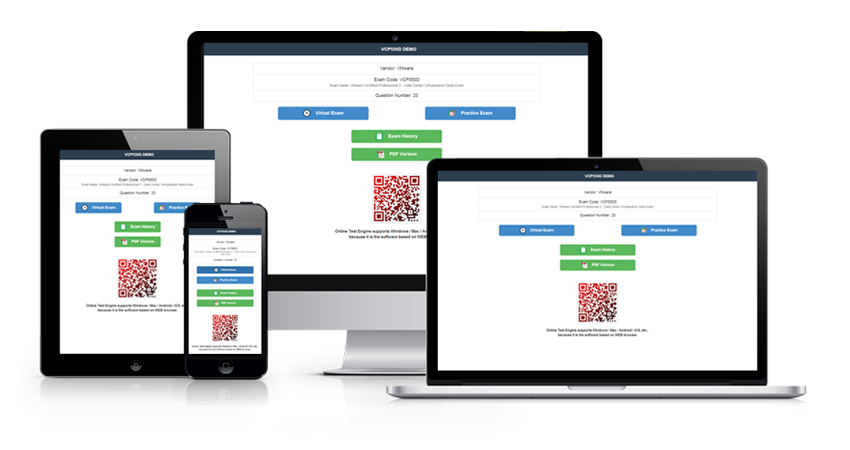
 Ob druckbare PDF, Desktop-Testengine oder Online-Testengine – PrüfungFrage bietet die 191 Prüfungsfragen zu Anthropic Claude Certified Architect - Foundations in drei Formaten an. So lernen Sie für die CCAR-F Prüfung genau so, wie es zu Ihrem Alltag passt.
Anthropic CCAR-F Prüfungsübersicht:
| Zertifizierungsanbieter: | Anthropic |
|---|---|
| Prüfungsname: | Claude Certified Architect – Foundations |
| Prüfungsnummer: | CCA-F (also referred to as CCAR-F in some references) |
| Prüfungsgebühr: | Kostenlos für die ersten 5.000 Partner-Mitarbeiter während des Early Access; danach 99 USD |
| Verfügbare Sprachen: | Englisch |
| Prüfungsformat: | Multiple-Choice (eine Antwort), Szenariobasierte Fragen, Multiple-Choice (mehrere Antworten) |
| Gültigkeitsdauer des Zertifikats: | 2 Jahre ab dem Datum des Bestehens |
| Prüfungsdauer: | 120 Minuten |
| Mindestpunktzahl: | 720 von 1000 Punkten (skalierte Punktzahl) |
| Anzahl der Fragen: | 60 |
| Empfohlenes Training: | Offizielle Schulungskurse der Anthropic Academy |
| Prüfungsanmeldung: | Anthropic CCA-F Zugangsanfrage & Registrierung Bewerbung für das Anthropic Partner Network |
| Beispielfragen: |  |
| Prüfungsmethode: | Online-Fernüberwachung via ProctorFree; Closed-Book, keine externen Ressourcen erlaubt |
| Voraussetzungen: | Derzeit beschränkt auf Mitarbeiter von Organisationen des Anthropic Partner Network. Empfohlene Voraussetzungen: Abschluss aller Kurse der 200er-Stufe in der Anthropic Academy, praktische Vertrautheit mit dem Claude Agent SDK, Claude Code, der Anthropic API und dem Model Context Protocol (MCP) sowie mindestens 6 Monate praktische Erfahrung in der Entwicklung von Produktionslösungen mit Claude-Technologien. |
| Offizielle Syllabus-URL: | https://anthropic.skilljar.com/claude-certified-architect-foundations-access-request |
Anthropic CCAR-F Prüfungsthemen:
| Abschnitt | Gewichtung | Ziele |
|---|---|---|
| Claude Code Konfiguration & Workflows | 20% | - CI/CD-Integration und Parameter für den nicht-interaktiven Modus - CLAUDE.md-Hierarchie, Priorität und @import-Regeln - Pfadspezifische Regeln und .claude/rules/-Konfiguration - Benutzerdefinierte Slash-Befehle und Plan-Modus vs. direkte Ausführung - Hooks vs. beratende Anweisungen (advisory instructions) |
| Prompt Engineering & Strukturierte Ausgabe | 20% | - System-Prompt-Design und Persona-Ausrichtung - Validierung, Parsing und Retry-Loop-Strategien - JSON-Schema-Design und Erzwingung strukturierter Ausgaben - Explizite Kriteriendefinition und Few-Shot Prompting |
| Kontextmanagement & Zuverlässigkeit | 15% | - Kontextbereinigung und Zusammenfassungsstrategien - Token-Budget-Management und Kostenkontrolle - Optimierung und Priorisierung des Kontextfensters - Idempotenz, Konsistenz und Ausfallsicherheit |
| Agentenbasierte Architektur & Orchestrierung | 27% | - Aufgabenzerlegung und dynamische Subagenten-Auswahl - Session-State-Management und Workflow-Erzwingung - Design von Agenten-Loops und Handhabung von stop_reason - Multi-Agenten-Muster: Coordinator-Subagent und Hub-and-Spoke - Fehlerbehebung, Guardrails und Sicherheitsmuster |
| Tool-Design & MCP-Integration | 18% | - Model Context Protocol (MCP) Architektur und JSON-RPC 2.0 - Implementierung von MCP-Tools, Ressourcen und Prompts - Tool-Verteilung und Berechtigungskontrollen - Tool-Schema-Design und Schnittstellengrenzen - Fehlerbehandlung und Formatierung von Tool-Antworten |
Antworten auf häufig gestellte Fragen zur CCAR-F Prüfung
Die Prüfung CCAR-F (Claude Certified Architect - Foundations) ist die offizielle Zertifizierungsprüfung von Anthropic. Nach dem Bestehen erhalten Sie die Zertifizierung Claude Certified Architect – Foundations auf der Stufe Grundlagen / Professional. Mit den 191 Übungsfragen von PrüfungFrage bereiten Sie sich gezielt auf alle Anforderungen dieser Prüfung vor.
Die CCAR-F Prüfung umfasst 60 Fragen, die Sie innerhalb von 120 Minuten beantworten. Planen Sie pro Frage nur ein knappes Zeitbudget ein und markieren Sie unsichere Aufgaben, statt zu lange an ihnen festzuhängen – so vermeiden Sie Zeitdruck am Ende der Prüfung. Trainieren Sie dieses Tempo vorab mit der Testengine von PrüfungFrage: Ein kompletter Durchlauf der 191 Übungsfragen unter Zeitbedingungen zeigt Ihnen zuverlässig, ob Ihr Arbeitstempo für die echte Prüfung ausreicht.
Die Bestehensgrenze der CCAR-F Prüfung liegt bei 720 von 1000 Punkten (skalierte Punktzahl), die offizielle Anmeldegebühr beträgt Kostenlos für die ersten 5.000 Partner-Mitarbeiter während des Early Access; danach 99 USD. Beachten Sie dabei: Jeder Wiederholungsversuch muss erneut vollständig bezahlt werden. Es lohnt sich daher, vor der Anmeldung mit den 191 Übungsfragen von PrüfungFrage zu prüfen, ob Sie die geforderte Punktzahl bereits stabil erreichen.
Derzeit beschränkt auf Mitarbeiter von Organisationen des Anthropic Partner Network. Empfohlene Voraussetzungen: Abschluss aller Kurse der 200er-Stufe in der Anthropic Academy, praktische Vertrautheit mit dem Claude Agent SDK, Claude Code, der Anthropic API und dem Model Context Protocol (MCP) sowie mindestens 6 Monate praktische Erfahrung in der Entwicklung von Produktionslösungen mit Claude-Technologien. Verbindliche und stets aktuelle Details zu den Teilnahmebedingungen finden Sie auf der offiziellen Prüfungsseite von Anthropic.
Online-Fernüberwachung via ProctorFree; Closed-Book, keine externen Ressourcen erlaubt
Die Anmeldung erfolgt über folgende offizielle Kanäle:
Anthropic empfiehlt zur Vorbereitung auf diese Prüfung unter anderem folgende Schulungen:
Ergänzend dazu finden Sie bei PrüfungFrage 191 Übungsfragen, mit denen Sie den Schulungsstoff prüfungsnah vertiefen und Ihren Wissensstand jederzeit überprüfen.
Ja. Laden Sie zunächst die kostenlose PDF-Demo zu Anthropic Claude Certified Architect - Foundations herunter und prüfen Sie in Ruhe Aufbau und Qualität der Fragen. Nach dem Kauf profitieren Sie zusätzlich 365 Tage lang von kostenlosen Aktualisierungen: Sobald sich der Fragenbestand ändert, erhalten Sie die neue Version automatisch. Nach Ablauf des ersten Jahres verlängern Sie den Update-Service mit 50 % Rabatt.
Sollten Sie die zugehörige Prüfung innerhalb von 60 Tagen nach dem Kauf nicht bestehen, erstattet PrüfungFrage Ihnen den vollständigen Kaufpreis zurück. Voraussetzungen dafür: Der Prüfungsversuch darf frühestens 3 Tage nach dem Kauf stattfinden; kostenlose Materialien, abgelaufene Bestellungen sowie Fälle, in denen das Produkt zwar heruntergeladen, aber keine Prüfung abgelegt wurde, sind ausgeschlossen; der Name des Prüflings muss mit dem Namen des Zahlenden übereinstimmen. Reichen Sie innerhalb von 2 Tagen nach der Prüfung eine eingescannte Anmeldebestätigung (Enrollment Slip) und das offizielle Score Report als PDF ein – die Bearbeitung erfolgt innerhalb von 7 Tagen. Alternativ können Sie statt der Rückerstattung kostenlos zwei gleichwertige Prüfungsmaterialien wählen und behalten dabei den Update-Service für Ihr ursprünglich gekauftes Produkt. Die Lieferung selbst erfolgt unmittelbar nach der Zahlung: Ihr Download steht sofort bereit, zusätzlich erhalten Sie die Dateien innerhalb einer Minute per E-Mail. Sollte nach 2 Stunden nichts angekommen sein, wenden Sie sich bitte an unseren Kundenservice. Eine Begrenzung der Anzahl der Installationen gibt es nicht.
Die CCAR-F Prüfung gliedert sich in 5 Themenbereiche. Zu den gewichtigsten zählen:
- Kontextmanagement & Zuverlässigkeit (15%)
- Claude Code Konfiguration & Workflows (20%)
- Prompt Engineering & Strukturierte Ausgabe (20%)
Die vollständige Gliederung aller Bereiche mit den jeweiligen Gewichtungen finden Sie in der Prüfungsübersicht weiter oben auf dieser Seite.
Anthropic Claude Certified Architect - Foundations CCAR-F Prüfungsfragen mit Lösungen
During testing, when a customer says, "I need a refund for my recent purchase," the agent immediately invokes process_refund but populates the required order_id parameter with a plausible-looking fabricated value instead of first calling lookup_order. The refund fails because the invented order identifier does not exist. Which change directly addresses the root cause of the fabricated order_id?
- A. Update the process_refund tool description to state explicitly that order_id must come from a successful lookup_order result and must never be assumed, inferred, or invented.
- B. Preprocess customer messages to extract any mentioned order identifiers and inject them into the conversation before sending the request to Claude.
- C. Change tool_choice from auto to any so Claude must call a tool on every turn.
- D. Add server-side validation that checks whether order_id exists before attempting the refund and returns an error when it does not.
Antwort: A 🗳️
Erklärung: (Nur für PrüfungFrage-Mitglieder sichtbar)
A prompt asks Claude to produce Markdown tables. Which addition MOST increases consistency?
- A. Specify exact column names.
- B. Increase randomness.
- C. Omit examples.
- D. Remove formatting instructions.
Antwort: A 🗳️
Erklärung: (Nur für PrüfungFrage-Mitglieder sichtbar)
You are building a structured data extraction system using Claude. The system extracts information from unstructured documents, validates the output using JavaScript Object Notation (JSON) schemas, and maintains high accuracy. It must handle edge cases gracefully and integrate with downstream systems.
Your system must extract event details from calendar invitations and output JSON that strictly conforms to a schema with fields for title, date, time, location, and attendees. Downstream systems reject any malformed or non-conformant JSON.
What approach provides the most reliable schema compliance?
- A. Include detailed JSON formatting instructions and the target schema in your prompt, then parse Claude's text response as JSON.
- B. Define a tool with your target schema as input parameters and have Claude call it with the extracted data.
- C. Pre-fill Claude's response with an opening brace to force JSON output, then complete and parse the response.
- D. Append instructions like "Output only valid JSON matching the schema exactly" and implement retry logic to re-prompt when JSON parsing fails.
Antwort: B 🗳️
Erklärung: (Nur für PrüfungFrage-Mitglieder sichtbar)
Your MCP server implements a check_availability tool that queries an external calendar API.
During testing, you encounter three error conditions: (1) the tool is called with a malformed request missing the required user_email parameter, (2) the calendar API returns a 404 because the specified user doesn't exist in the calendar system, and (3) the calendar API returns a 503 because the service is temporarily unavailable. How should each error be reported according to MCP's error handling design?
- A. Report all three as JSON-RPC protocol errors.
- B. Report all three as tool results with isError: true.
- C. Report error 1 as a JSON-RPC protocol error; report errors 2 and 3 as tool results with isError:
true. - D. Report errors 1 and 2 as JSON-RPC protocol errors; report error 3 as a tool result with isError:
true.
Antwort: C 🗳️
Erklärung: (Nur für PrüfungFrage-Mitglieder sichtbar)
You are building a multi-agent research system using the Claude Agent SDK. A coordinator agent delegates to specialized subagents: one searches the web, one analyzes documents, one synthesizes findings, and one generates reports. The system researches topics and produces comprehensive, cited reports.
In production, you observe that simple fact-checking queries (e.g., "What year was the Paris Climate Agreement signed?") traverse all four subagents sequentially, consuming 40+ seconds and significant tokens per query. Complex comparative research benefits from the full pipeline.
Your query distribution is diverse and evolving as users discover new applications. What's the most effective approach to optimize for varying query complexity?
- A. Train a query complexity classifier on labeled historical data to predict optimal subagent combinations, retraining periodically as query patterns evolve.
- B. Implement pattern-based routing that categorizes queries by structure (single-fact vs.
comparative vs. analytical) and maps each category to a predefined subagent combination. - C. Create a fast-path for factual questions that bypasses subagents entirely, routing all other queries through the complete pipeline to ensure research thoroughness.
- D. Have the coordinator analyze each query and dynamically decide which subagents to invoke based on its assessment of query requirements.
Antwort: D 🗳️
Erklärung: (Nur für PrüfungFrage-Mitglieder sichtbar)
















Adleff -
Ich habe CCAR-F bestanden. Ich mag dieses Lernmaterial wirklich und ic finde, dass es sehr nützlich für die Prüfung ist. Wenn du auch planst, an der Prüfung CCAR-F teilzunehmen, wird dieses Lernmaterial dir bestimmt helfen. Dann kauf es und studiere es. Du kannst die Prüfung auch bestehen.