


 906 Kundenrezensionen
 Zurückzahlung aller Gebühren, wenn...
Schaffen Sie die Snowflake NAS-C01 Zertifizierungsprüfung zum ersten Mal nicht, versprechen wir Ihnen, dass Sie alle für die NAS-C01 PrüfungFrage bezahlten Gebühren noch zurückhaben können, solange Sie uns das vom Prüfungszentrum ausgestellte „ungenügende" Zeugnis als Beleg vorlegen. Wir werden Ihnen zurückzahlen, nachdem wir die Gültigkeit nachgeprüft haben. Mehr als 6,000 Prüflinge haben bei uns Hilfe bekommen, niemals haben wir unser Versprochen gebrochen, sonst existiert unsere Firma nicht so lange. Oder Sie können kostenlos andere PrüfungFragen bei uns wechseln, die einfacher sind.
Mit einem Wort, vertrauen Sie uns, wird Ihr ganzes Leben unterschiedlich sein!
NAS-C01 Zertifikat, Schlüssel zum beruflichen Erfolg!
Diejenige, die mehr als ein NAS-C01 Zertifikat auf dem Lebenslauf steht, sind die gefragtesten Kandidaten für irgendeine Arbeitsstelle in IT-Branche, denn jede Firma stellt gerne solche über mehrere NAS-C01 IT-Zertifikate verfügende Arbeitsbewerber ein. Die IT-Branche hält Schritt mit den neuesten Innovationen und Erfindungen, daher müssen die IT-Profis zu jeder Zeit Ihre Wissensdatenbank aktualisieren. Manchmal bedeutet die Aktualisierung der Kenntnisse in IT-Branche das Wiederholen der vorhandenen Konzeptionen und Ideen sowie das Lernen der neuen Dinge. Angesichts der Tatsache, dass ein NAS-C01 IT-Zertifikat das offiziellste Kriterium dafür, die Fähigkeiten der Stellenbewerber für bestimmte Aufgaben zu überprüfen, ob sie dieser Arbeitsstelle überlegen sein können, werden ihnen mehrere Snowflake NAS-C01 IT-Zertifikate sicherlich behilflich sein.

Einfach und bequem zu kaufen: Um Ihren Kauf abzuschließen, gibt es zuvor nur ein paar Schritte. Nachdem Sie unser Produkt per E-mail empfangen, herunterladen Sie die Anhänge darin, danach beginnen Sie, fleißig und konzentriert zu lernen!
Vielfältige Versionen für Snowflake NAS-C01 PrüfungFragen
Wollen Sie die NAS-C01 Zertifizierungsprüfung einfach bestehen, dann müssen Sie den richtigen Dreh herauskriegen. Recherchieren Sie zuerst auf unserer Webseite den Prüfungscode, wie z.B. NAS-C01, dann herunterladen Sie das kostenlose NAS-C01 Demo, das Sie probeweise gebrauchen können. Wären Sie mit diesem NAS-C01 Demo zufrieden, dann stehen Sie vor einer Wahl, was für eine Version Ihnen am besten gefällt, denn wir haben drei Versionen entwickelt:
PDF ist billig und kann druckt werden, so dass Sie sich in besserer Laune auf Snowflake NAS-C01 Prüfung vorbereiten können, denn nach dem Drucken würden Sie so lernen, als ob ein interessantes Buch lasen. Laut Statistiken ist das Lernen auf dieser traditionellen Weise am effizientesten.
PC Simulationssoftware ist, wie die Benennung schon besagt, zugänglich für die Simulation der NAS-C01 Zertifizierung, mit der Sie zu Hause den Ablauf der NAS-C01 (SnowPro Specialty - Native Apps) Prüfung im voraus persönlich erleben. Schätzen Sie diese Funktion nicht gering, denn nach der Simulation würden Sie bei der echten NAS-C01 Prüfung mehr Selbstbewusstsein haben und weniger nervös sein, so dass Sie keinen Fehler wegen der Unvertrautheit machen würden. Außerdem kann dieses NAS-C01 Simulationssoftware in mehrere Computers heruntergeladen werden, aber bis jetzt kann es nur auf dem Windowsbetriebssystem funktionieren.
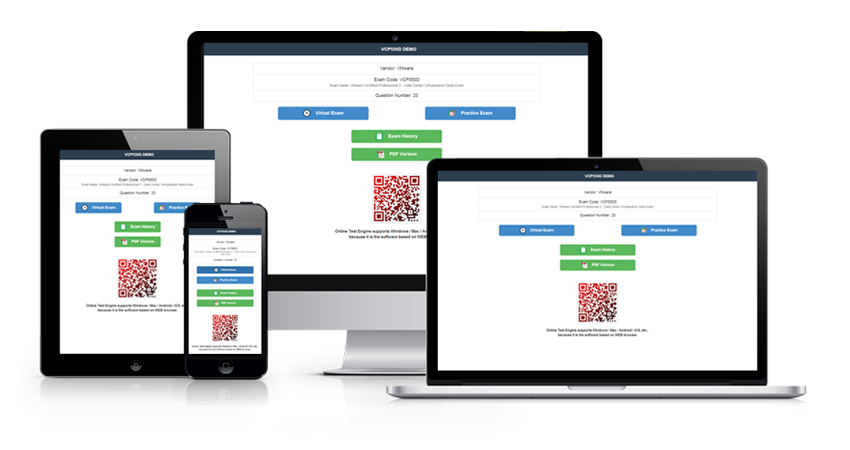
APP (Online Test Engine) wird von uns neulich entwickelt, ihr Vorteil ist auch sehr deutlich. Auf irgendeinem elektrischen Gerät kann es funktionieren, wie etwa Smartphone mit Andriod, iphone, iPad, PC Computer usw..Sogar wenn Ihr elektrisches Gerät offline ist, ist dieses Snowflake NAS-C01 App noch benutzbar. Deswegen können Sie zu jeder Zeit und an jedem Ort die NAS-C01 PrüfungFragen wiederholen. Beim NAS-C01 Lernen makiert das System automatisch die falsch geschriebenen Übungen, dann erscheinen soche Übungen mehr als die anderen, bis dass Sie richtige Antworten kreuzen. Durch mhermaliges Wiederholen werden Sie sicherlich einen tieferen Eindruck haben.
Unsere Mitarbeiter haben die professionellste Berufsausbildung erhalten, sie sind den ganzen Tag online, um Ihre Fragen nach NAS-C01 so schnell wie möglich zu beantworten. Neben diesen Mitarbeitern haben wir noch pflichtbewusste IT-Profis, die jeden Tag den Aktulisierungszustand der NAS-C01 PrüfungFragen zu überprüfen, damit die Möglichkeit der Durchfallensrate am niedrigsten gesenkt wird. Solange sich die NAS-C01 Prüfungsfargen aktualisieren, schickt unser System automatisch an Sie per E-mail. Was am Wichtigsten ist, dass die Aktualisierung der NAS-C01 (SnowPro Specialty - Native Apps) Zertifizierung kostenlos ist, und dieser Service ein Jahr lang dauert. Ein Jahr später, zugestehen wir Ihnen 50% Rabatt darauf.
Snowflake SnowPro Specialty - Native Apps NAS-C01 Prüfungsfragen mit Lösungen:
1. A provider has released a Snowflake Native Application that calculates risk scores. As a consumer, you've installed the application. However, you are seeing inconsistent results when querying a view provided by the application named 'RISK SCORES'. You suspect the provider has an issue with their data or logic. Which of the following actions are MOST appropriate to troubleshoot this from the consumer side, focusing on querying and without access to the provider's source code?
A) Use on the provider's account to establish a secure connection and directly debug the provider's stored procedures.
B) Examine the 'INSTALLATION INFORMATION' view in the application's database to check for provider-published error messages or status updates related to data quality issues. Use queries to identify patterns in the inconsistent results.
C) Utilize the 'DEBUG' procedure exposed by the application (if any) to step through the risk calculation logic with specific input values.
D) Raise a support ticket with the provider through the Snowflake Marketplace. Include example queries, input data, and the expected vs. actual results to facilitate their debugging process. Further, Query data using different warehouse sizes to see if concurrency is a factor.
E) Contact Snowflake Support and provide them with a detailed description of the issue and relevant query examples. Snowflake Support can access the provider's environment and investigate.
2. A Snowflake Native App developer is creating an application that accesses a secured table 'CUSTOMER DATA' within the provider's account. The developer wants to grant the consumer read-only access to this table through the application, but only after the application is installed and the consumer has accepted the terms and conditions. Which of the following steps are necessary to achieve this goal? (Choose two)
A) Create a share from the provider account containing the 'CUSTOMER_DATA table and grant the consumer account access to this share using the Snowsight UI, specifically setting the ' READ ONLY' privilege on the table after the application is installed.
B) The provider creates a versioned schema in the listing and shares it with the consumer account. Once the consumer accepts the terms and conditions, the provider executes 'GRANT SELECT ON TABLE CUSTOMER_DATA TO APPLICATION ROLE app_role' within the consumer account using a secure UDF.
C) Define a stored procedure within the application package that, upon execution in the consumer account (post-installation), executes a 'GRANT SELECT ON TABLE CUSTOMER_DATA TO APPLICATION ROLE app_role' statement. The application itself doesn't directly share the data; the procedure manages the access.
D) Define a manifest file within the application package that specifies the 'CUSTOMER DATA' table as a resource and declares the 'SELECT privilege required by the application. Snowflake automatically grants this privilege to the application's default role upon installation.
E) Create an outbound share within the application that shares the 'CUSTOMER DATA' table with a specific application role. Configure an activation hook that runs post-installation to grant the 'SELECT' privilege on the table to the application role using the 'GRANT' command.
3. You are developing a Snowflake Native Application that includes a Python module for data transformation. This module relies on the pandas' and 'requests' libraries. You are using an 'environment.yml' file to manage dependencies. Which of the following 'environment.yml' configurations is the MOST secure and correct way to define these dependencies for your application? Assume you want to install these packages directly from conda-forge channel.
A) 
B) 
C) 
D) 
E) 
4. You are designing a Snowflake Native App that relies on a specific version of a shared library. You want to ensure that your application continues to function correctly even if the provider of the shared library releases a new, incompatible version. How can you achieve version isolation for your application's dependencies within the Snowflake Native App Framework?
A) Package the required version of the shared library directly within your application's code bundle, ensuring it is isolated from any external updates.
B) Implement a custom version compatibility check within your application code to gracefully handle potential incompatibilities with newer versions of the shared library.
C) Utilize the ' feature to directly link your application to a specific version of the shared library hosted in an external repository.
D) Leverage Snowflake's dependency management system to specify a version range for the shared library in your application's setup script.
E) Utilize Snowflake's 'API_INTEGRATION' to create endpoint where you have version control for the shared library.
5. A provider is developing a Snowflake Native Application that uses a managed task to perform critical data transformations. The provider wants to ensure the managed task is only ever executed when the application is in a 'RUNNING' state. They have defined a secure view which returns a single row and a column named 'status' of type VARCHAR. The provider intends to use the 'EXECUTE MANAGED TASK' privilege in conjunction with a user-defined function (UDF) to control task execution. Which of the following approaches, utilizing a UDF and the 'EXECUTE MANAGED TASK' privilege, will correctly and securely prevent the managed task from running unless the application status is 'RUNNING'? Assume the UDF is created with the 'SECURE keyword.
A) Create a UDF that executes ' if 'SELECT status FROM app_db.app_schema.app_status_view' returns 'RUNNING'. Grant 'EXECUTE MANAGED TASK' on the managed task to the application role. Grant SELECT on the view.
B) Create a UDF that returns TRUE only if 'SELECT status FROM app_db.app_schema.app_status_view' returns 'RUNNING'. Then, in the managed task definition, use the WHEN clause with the UDF. Grant 'EXECUTE MANAGED TASK' on the managed task to the application role. Do not grant SELECT on the view.
C) create a UDF that executes if 'SELECT status FROM app_db.app_schema.app_status_view' does not return 'RUNNING'. Grant 'EXECUTE MANAGED TASK' on the managed task to the application role. Do not grant SELECT on the view.
D) Create a UDF that executes 'SYSTEM$TASK SUSPEND('app_db.app_schema.my_managed_task'Y if 'SELECT status FROM app_db.app_schema.app_status_view' does not return 'RUNNING', otherwise executes Grant 'EXECUTE MANAGED TASK' on the managed task to the application role. Grant 'SELECT on the view.
E) Create a UDF that returns TRUE only if 'SELECT status FROM app_db.app_schema.app_status_view' returns 'RUNNING'. Then, in the managed task definition, use the WHEN clause with the UDF. Grant 'EXECUTE MANAGED TASK' on the managed task and 'SELECT on the to the application role.
Fragen und Antworten:
| 1. Frage Antwort: B,D | 2. Frage Antwort: C,E | 3. Frage Antwort: D | 4. Frage Antwort: A | 5. Frage Antwort: B |
















Anzer -
Ausgezeichnete Studienführung für meine Vorbereitung der NAS-C01 Prüfung.